Landing at Haneda Airport? Great choice. You’re already much closer to the heart of Tokyo than if you flew into Narita. But now comes the next part: figuring out how to get from Haneda airport to Tokyo. Don’t worry, it’s pretty straightforward once you know your options. Whether you want something fast and affordable like the train, something simple like a bus, or you just want to hop in a taxi and go, this guide breaks it all down. Let’s make your arrival into Tokyo as smooth as possible.
Using Tokyo’s other airport? Read our Narita Airport to Tokyo transport guide.
Fares and ticket rules checked: 29 October 2026. Examples below are one-way fares for the named route, not the total cost to every Tokyo hotel. Confirm current prices and the last practical connection before travel. Terminal directions focus on Terminal 3; follow the signs for your actual arrival terminal.
From Haneda Airport to Tokyo by Train
If you’re watching your travel budget, taking the train from Haneda airport to Tokyo is your best option. It’s cheap, fairly quick, and pretty easy to figure out once you know where to go. You’ve got two solid options here:
Tokyo Monorail
At Terminal 3, follow the signs for the Tokyo Monorail. The official one-way fare to Monorail Hamamatsucho is ¥520 per adult and ¥260 per child for a paper ticket, or ¥519 and ¥259 respectively with an IC card. Allow about 20 minutes for the train journey, depending on the service. From Hamamatsucho, you can change to the JR Yamanote or Keihin-Tohoku Line; the onward JR journey costs extra.
You can pay with an IC card like Suica, Pasmo, ICOCA, or just buy a regular ticket. Machines are easy to use and have an English language option, which helps a lot.

Keikyu Line
Follow the Keikyu signs at Terminal 3 for trains towards Shinagawa. A regular adult one-way ticket to Shinagawa is ¥330, as listed in the official Tokyo transport guide. You can change to the JR Yamanote Line there, paying the onward fare separately. Check the Keikyu fare and journey planner for your final station and ticket type.
Keikyu trains serve different destinations, including Shinagawa and Yokohama, so check the departure display before boarding. Some services continue directly onto the Toei Asakusa Line; others require a change. You can use a supported IC card or buy a paper ticket. Follow the operator’s route map rather than assuming every train goes to central Tokyo.
If you’ve got a ton of luggage, be prepared. It can get a little tight on the trains during busy hours. Try to travel light if you can, or avoid peak commute times.
From Haneda Airport to Tokyo by Bus
If you’re not in a big rush and don’t feel like dealing with train transfers, especially with luggage, taking a bus from Haneda can be a comfortable option. It’s affordable, decently quick, and drops you off at some pretty convenient spots. Here are the two main bus services you’ll find at Haneda:
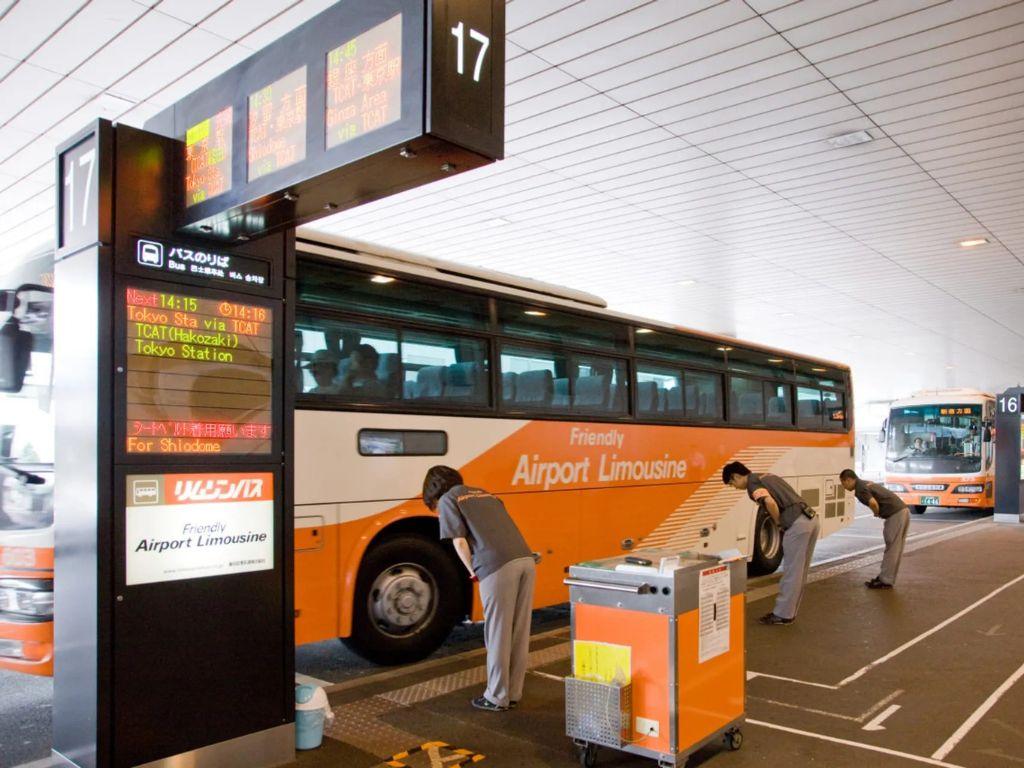
Airport Limousine Bus
Airport Limousine Bus can be convenient for stations and selected hotels in areas such as Shinjuku, Ikebukuro and Tokyo City Air Terminal (T-CAT). Choose the exact stop nearest your hotel. The operator allows up to two checked items per passenger, each up to 30kg and 50 × 60 × 120cm. Read the official baggage rules before travelling with skis, oversized bags or special equipment. Keep passports, valuables and power banks with you in the cabin.
Fares depend on the route and service. For example, the regular Haneda–Shinjuku service lists ¥1,400 per adult and ¥700 per child; do not apply that price to every destination or late-night departure. Online ticket purchase is available for eligible services, and tickets can also be bought at airport counters or machines. Check your travel date, terminal, stop and departure before paying.
Our payment experience: On an earlier trip, a ticket machine requested a 4-digit PIN and did not accept my Malaysian card’s 6-digit PIN. The staffed counter accepted my card instead. This was my experience with that card and machine, not a rule that all Malaysian cards fail. If your payment is declined, ask the staff for the supported options and keep a backup payment method.
Keikyu Limousine Bus
Keikyu also runs airport buses to destinations such as Yokohama, outside central Tokyo. On the Haneda–Yokohama Station (YCAT) route, the regular one-way fare is ¥800 adult / ¥400 child. The listed late-night/early-morning fare is ¥2,000 / ¥1,000. Other routes have different fares and journey times.
Online purchase is route-specific. For Haneda departures to YCAT, Keikyu offers same-day online tickets until 10 minutes before departure. This does not reserve a particular departure: boarding is first come, first served. That online option does not apply in the reverse direction. Airport ticket counters and machines remain alternatives; check the exact route’s instructions.
Both buses are pretty comfortable and a lot less stressful than hauling your luggage through train stations. Just be sure to check the schedule and allow a bit of extra time, especially if you’re landing late or during peak travel periods.
From Haneda Airport to Tokyo by Taxi
If you’re after comfort, privacy, or just don’t want to navigate public transport with luggage in tow, taking a taxi from Haneda is a solid option. Taxis are easy to find. They are lined up at the taxi stand on the first floor of Terminal 3, ready to go.
Metered taxi costs depend on the destination, distance, traffic and time of travel, so there is no reliable single “central Tokyo” fare. Ask about the likely total, tolls, vehicle size and any extra charges before you depart. For several passengers, compare the per-car cost with the total rail or bus fares.
Flat-Rate Taxis
Haneda Airport’s official taxi guide explains the flat-rate options for eligible Tokyo and Kanagawa areas. Some areas use metered fares instead, and toll-road charges are added to the flat rate. Ask the taxi company or airport staff to confirm the applicable zone, daytime or late-night rate and total for your destination; do not assume one starting fare applies everywhere.
Road journey times vary by destination and traffic. Allow extra time during busy periods, and use the official taxi ranks. If you pre-book a private transfer, confirm the meeting point, waiting allowance, vehicle capacity and what the quoted price includes.

FAQs About Getting From Haneda Airport to Tokyo
Is taking a taxi from Haneda Airport to Tokyo expensive?
What are the perks of using the Airport Limousine Bus?
Can I buy Haneda airport bus tickets online?
How much is the Tokyo Monorail to Hamamatsucho?
Are Suica or PASMO accepted on all trains and airport buses?
Getting from Haneda Airport To Tokyo
Getting from Haneda Airport to Tokyo really depends on your travel style. Want comfort and door-to-door service? Go with a taxi. Prefer something cheaper and still convenient? The Airport Limousine Bus is a great middle ground. And if you’re looking to keep costs low, the Tokyo Monorail or Keikyu Line will get you into the city for just a few hundred yen.
Before you fly, save your hotel’s full address and nearest station, check your arrival terminal and look up the final connection for your actual travel date. A late airport departure is only useful if the onward train or bus still runs. Leave time for immigration, baggage collection and finding the stop. For the arrival formalities, see our Visit Japan Web guide.
What is the best way to travel from Haneda Airport to Tokyo?
The best option depends on the Tokyo district, arrival time, luggage and group size. The Tokyo Monorail and Keikyu Line are generally efficient for rail connections, while airport buses or private transfers can be easier for families, larger bags or hotels without a convenient station.
Haneda Airport to Tokyo transport comparison
The best option depends on the Tokyo district, luggage and arrival time.
- Tokyo Monorail: useful for connections through Hamamatsucho
- Keikyu Line: convenient for Shinagawa and through-services to other districts
- Airport bus: helpful with luggage when it stops near the hotel
- Taxi or private transfer: simplest door-to-door choice but usually the highest cost
- Check the final service time for late-night arrivals