
One thing we quickly realised while planning our trips to Club Med Lijiang is that getting there isn’t as straightforward as most destinations in China.
Unlike cities such as Kunming, Guangzhou, or Shanghai, there are currently no direct flights from Kuala Lumpur to Lijiang. Every route requires at least one connection, and depending on which airline you choose, the journey itself can end up shaping your holiday more than you expect.
After visiting Lijiang more than once, we ended up taking two completely different approaches.
On our first trip, we flew with China Eastern and Shanghai Airlines via Shanghai. The routing was longer and included an overnight stop, but that wasn’t necessarily a compromise.
Part of the reason we chose this route was because we had already planned to spend time in Shanghai after finishing our stay in Lijiang, so the transit naturally became part of the itinerary rather than lost travel time.
For our more recent trip, our focus was different. This time, we wanted to maximize time in Lijiang and minimize time in transit, so we tried China Southern via Shenzhen instead.
After experiencing both, we realized there isn’t one route that works for everyone. Some routes make more sense if you want efficiency. Others make more sense if your journey itself is part of the experience.
If you’re planning your own trip to Lijiang, here’s how both compared for us.
Flights to Lijiang: What Are Your Options?
When researching flights to Lijiang from Kuala Lumpur, there are generally a few routes that come up repeatedly.
One of the most common options is flying with Shanghai Airlines and China Eastern via Shanghai. This route typically takes you from Kuala Lumpur into Shanghai before continuing to Lijiang on a domestic connection. Depending on schedules, an overnight transit is often required.
At first, we also questioned whether spending a night in Shanghai made sense. But because we planned to visit Shanghai after Lijiang anyway, this routing worked naturally for us. Instead of viewing the transit as downtime, we treated Shanghai as another destination on the trip.

Another increasingly attractive option is China Southern via Shenzhen or Guangzhou.
This route is usually shorter overall and can get you into Lijiang before midday if timing works out. For travelers with limited leave or those wanting to spend more time in Yunnan itself, this becomes very appealing.
There is also Air China via Beijing or Chengdu, which can work depending on pricing and schedules.
Lastly, there’s an option many travellers consider because it seems the most straightforward on paper, flying directly from Kuala Lumpur to Kunming and continuing onward to Lijiang by high-speed rail, and honestly, this route makes a lot of sense.
You remove one flight segment entirely and replace it with China’s high-speed rail system, which is generally comfortable and reliable. The trade-off is that you’ll need to arrange your own transfer from Kunming Airport to Kunming Railway Station before boarding the train to Lijiang, which takes around three to four hours.
For travelers who enjoy train journeys and don’t mind moving between transport modes, this could actually become a very enjoyable option.
Our Experience: Flight from Kuala Lumpur to Shanghai by Shanghai Airlines
The trip started with an overnight flight from Kuala Lumpur to Shanghai operated by Shanghai Airlines on a Boeing 787.
Boarding the aircraft, the first thing we noticed was the amount of space.
Compared to many regional economy flights, legroom felt genuinely comfortable. There was roughly enough space for about a fist-width gap between our knees and the seat in front, which made a noticeable difference during a medium-haul overnight journey.
The seats themselves were softer than expected and had enough recline to feel comfortable for resting. It wasn’t the kind of recline that lets you fully sleep through the flight, but enough that we didn’t constantly adjust our sitting position trying to get comfortable.
One pleasant surprise was the entertainment system. Each seat came with personal screens and a surprisingly decent content selection.
There were international films alongside Chinese content, and we found ourselves switching between familiar Hollywood titles like The Hunger Games and Tenet, as well as a good mix of Chinese titles and even a Hong Kong thriller, L Storm just to pass time. Having entertainment onboard made the flight feel considerably shorter.

Meal service came midway through the journey.
We were offered two choices:
- Buttermilk fish with rice
- Chicken noodles
We tried both.
The buttermilk fish unfortunately wasn’t very memorable. The rice leaned soft and slightly wet, while the fish lost most of its texture after reheating.
The chicken noodles performed noticeably better. The noodles still had some bite left, seasoning was decent, and although slightly oily, it felt more satisfying overall.
The side salad consisted of shredded chicken, corn, and carrot. Nothing particularly exciting, but enough to break up the meal.
And once again, the fruit quietly became the highlight. Cold fruit after several hours onboard somehow always tastes better than expected.
Overall, this first sector left a surprisingly positive impression.
Overnight Stay at Dazhong Airport Hotel
Because our onward flight departed early the next morning, we booked Dazhong Airport Hotel inside the airport.
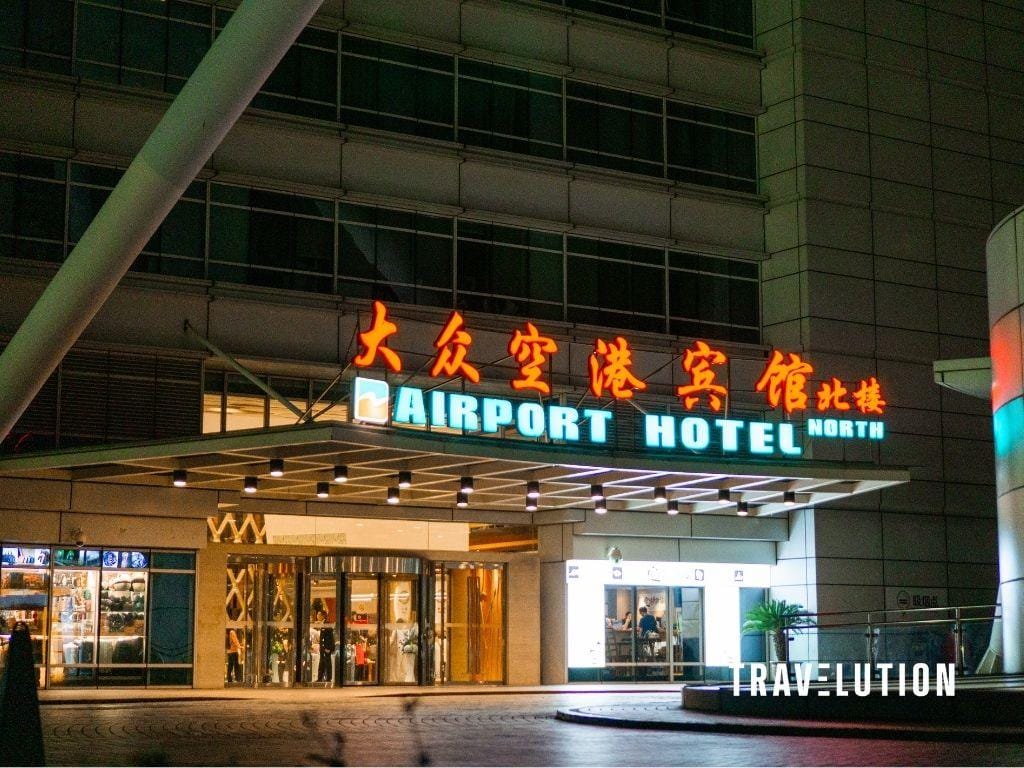
Transit here felt more like pressing pause instead of rushing through.
After immigration and collecting luggage, we checked into the hotel and immediately appreciated being able to shower and properly rest.
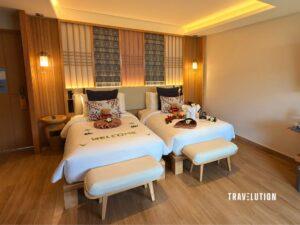
We got the Superior Room, which had two single beds. The space was decent, toiletries were fully prepared, and there was enough room to comfortably reorganize luggage.

They provided full toiletries including towels, toothbrushes, toothpaste, a comb, shampoo, and body wash, which meant we didn’t need to dig through our luggage. That alone made the brief overnight stay more bearable.
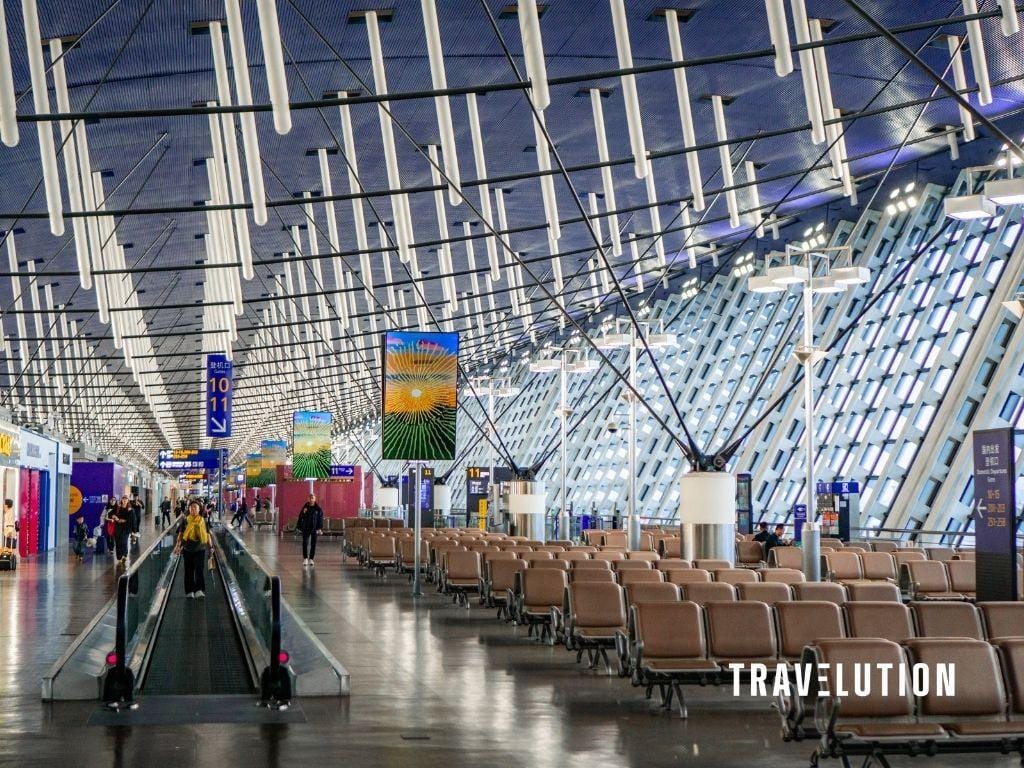
One underrated part of staying overnight was simply having access to food downstairs inside the terminal. Instead of surviving on vending machine snacks, we could actually sit down for supper before sleeping.
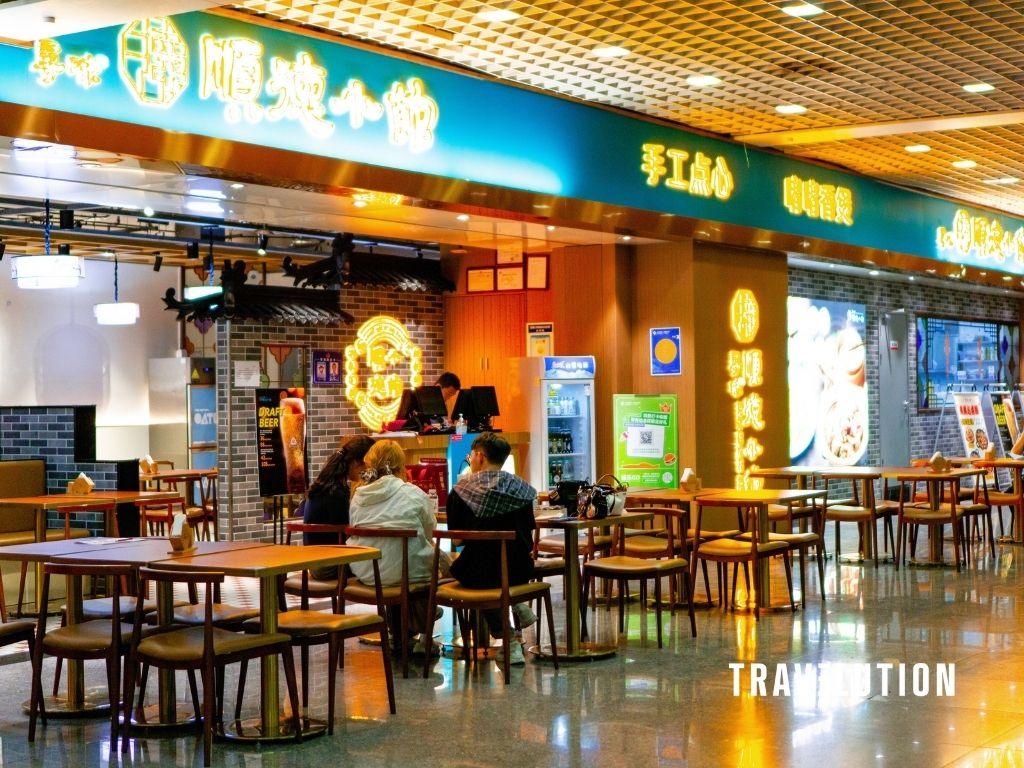
The only downside was noise. Depending on room location, you might hear the occasional plane taking off or the rhythmic thud of vehicles crossing speed bumps.
Still, compared to spending eight hours sleeping on airport chairs, this felt infinitely better.
Flight from Shanghai to Lijiang by China Eastern Airlines
The next morning, we boarded our flight from Shanghai to Lijiang, operated by China Eastern on a smaller Airbus A320. Compared to the previous flight, the comfort level took a noticeable dip. The legroom was tight, with barely a three-finger gap, making the seating feel cramped for the 4-hour journey.
The seats were stiff and upright, and no matter how I tried to adjust or lean, I could never quite get comfortable. It was the kind of seat that constantly had you fidgeting to find a better position, but without much success.

There was no seatback entertainment system, so be sure to have your own entertainment ready if you’re planning to fly this route. We ended up relying on downloaded shows and music to pass the time, which is definitely something to keep in mind for future travelers.
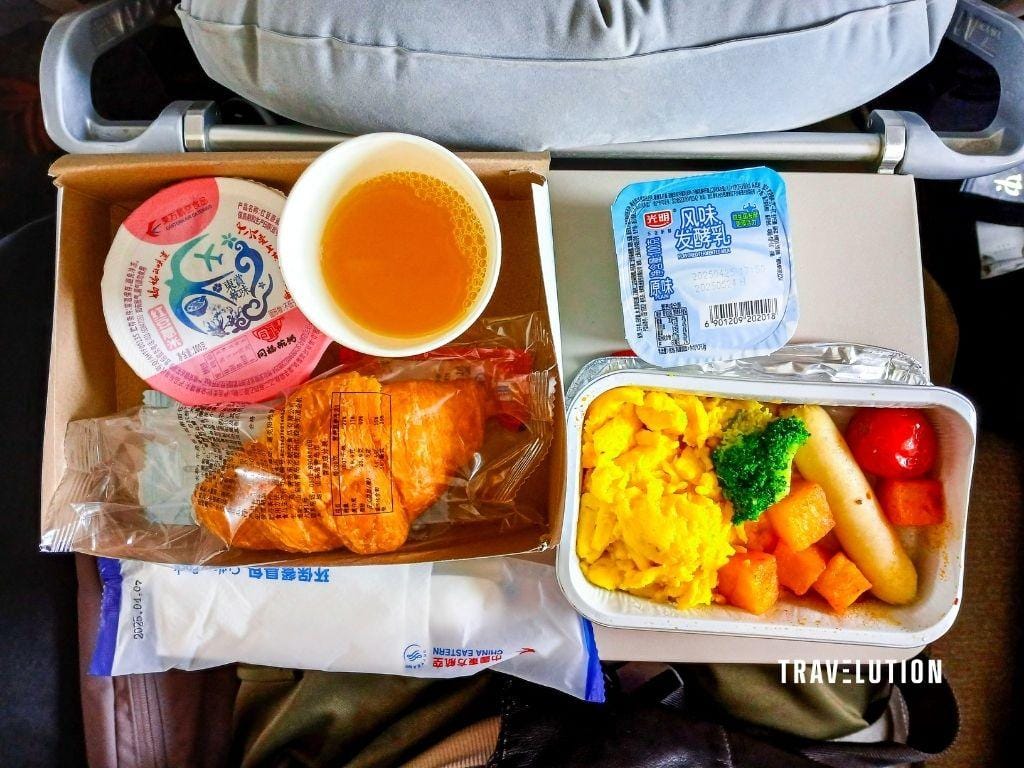
Meal service was relatively quick and featured a basic but decent breakfast. The main dish included an omelet, which was a bit on the salty side, but it sort of paired with the mini croissant served alongside. There were also potato cubes and a chicken sausage, which rounded out the warm components of the meal.
For dessert, we received a small cup of red bean and barley pudding, along with a yogurt. In a moment of improvisation, we mixed the two together, which actually gave the dessert a much better texture and flavor balance. It worked surprisingly well.
The tray also came with the usual garnish of broccoli and a cherry tomato, which didn’t quite tempt us, so we passed on those without a second thought.
Flight from Lijiang to Shanghai by Spring Airlines
For our return journey from Lijiang to Shanghai, we chose Spring Airlines, and if there’s one thing we’d do differently next time, it’s this. Spring’s Airbus A320 offered close to no legroom. Seats couldn’t recline, and I felt like I was pressed right up against the seat in front. It was reminiscent of old-school budget airline travel, but worse.
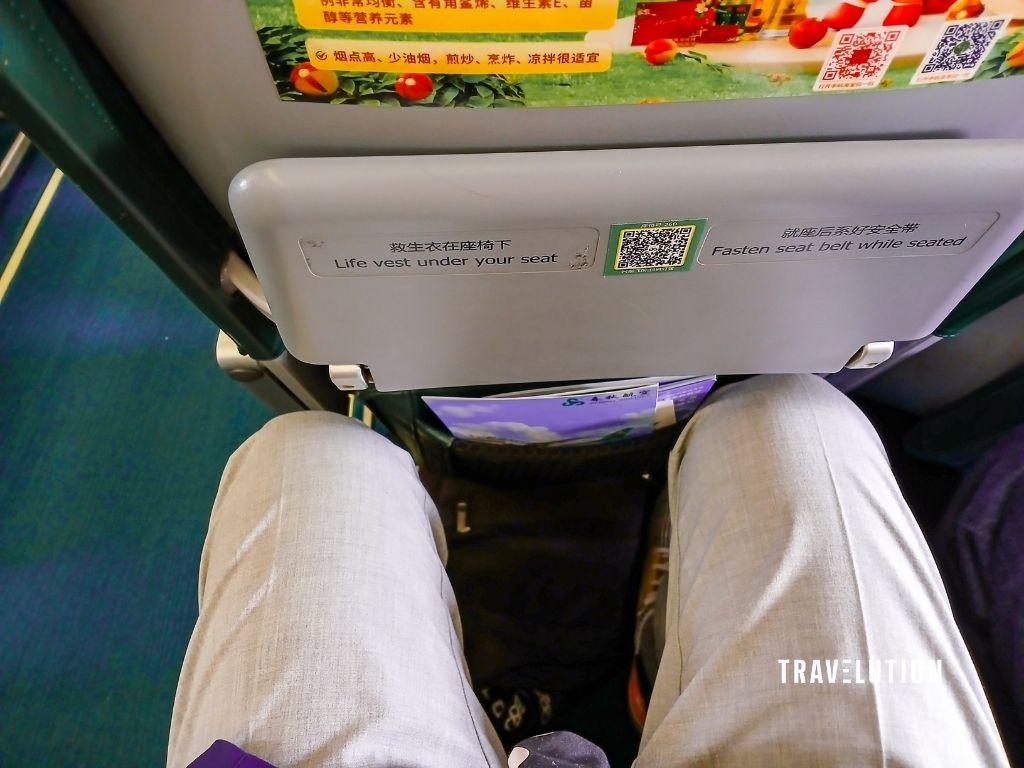
There’s no in-flight entertainment and no complimentary food, though you can purchase hot meals like rice with braised beef or marinated pork, along with drinks and snacks ranging from CNY 5–40. Our advice? Eat before boarding.
Our flight was delayed by nearly an hour, so we took the opportunity to grab a quick bite at the airport. We went for grilled sausage and chicken skewers, which are typical Chinese-style street snacks. Taste-wise, they were pretty much what you’d expect: flavourful but a little on the oily side, in my opinion.
Thankfully, Lijiang Sanyi Airport has a decent variety of food outlets near the gates, including skewers, soup noodles, braised pork rice, and more. It could be a lifesaver before the rather cramped and long flight.

Flight from Shanghai to Kuala Lumpur by Shanghai Airlines
The final leg of our journey, from Shanghai back to Kuala Lumpur, was once again with Shanghai Airlines, this time operated on a Boeing 737. Compared to the earlier flights, the aircraft felt slightly older, and legroom was still tight, roughly a two-finger gap between knees and seat. That said, the seats were noticeably softer and more cushioned than what we experienced on Spring Airlines, offering a bit more comfort for the longer flight duration.
There was no in-flight entertainment system, so this was another case of headphones on and relying on downloaded content to pass the time. If you’re flying this route, having your own shows or music is a must.
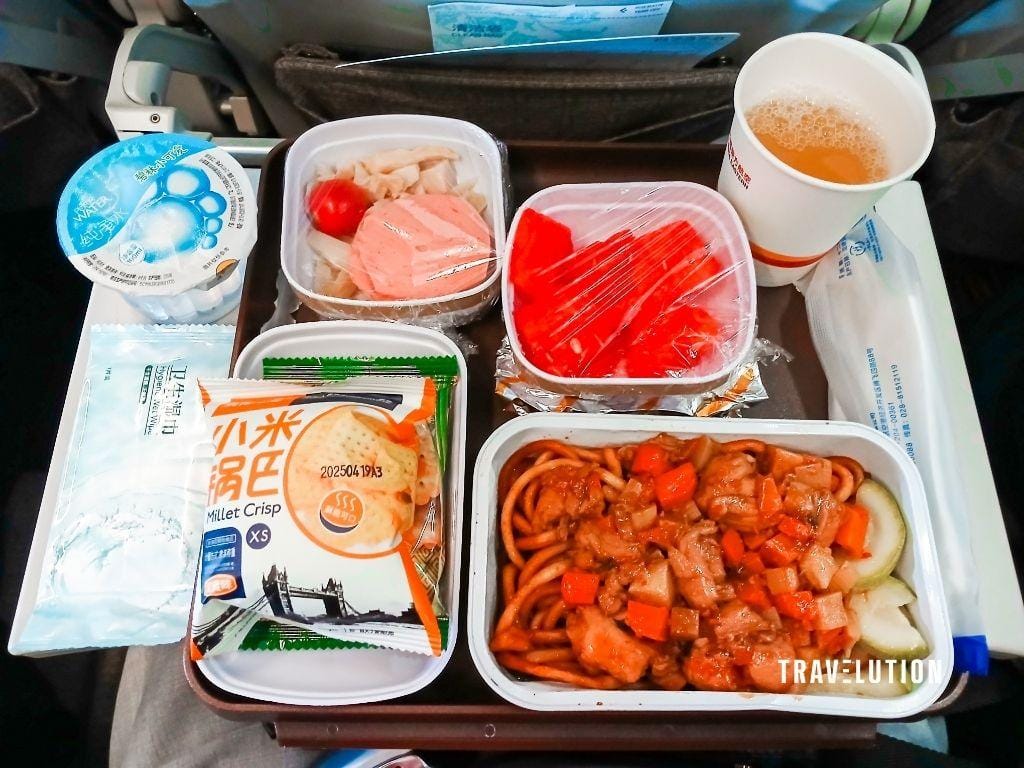
As for the in-flight meal, it was a rerun of the chicken noodles we had on the first leg of our trip. The noodles were serviceable, warm and filling, but nothing particularly memorable. What stood out more (in a bad way) was the side dish, which consisted of a cold chicken and pickled cabbage salad, topped with a slice of ham and a single cherry tomato. The salad lacked seasoning, the ham tasted artificial, and the tomato didn’t appeal to us, so we left it untouched.
Thankfully, the fruit portion was consistent with what we had before. The chilled slices of watermelon were refreshing, sweet, and easily the best part of the meal. A small comfort, but one we appreciated after a long travel day.
Our Recent Trip: China Southern Airlines via Shenzhen
For our most recent trip to Lijiang, our priorities were a little different from before.
Unlike our earlier itinerary where Shanghai itself was part of the journey, this time our focus was simple, spend more time in Lijiang and less time getting there.
That naturally led us to try China Southern via Shenzhen.
On paper, the route looked much more attractive. We departed Kuala Lumpur at 1:30AM, had around three hours of transit in Shenzhen, and touched down in Lijiang at approximately 11:30AM local time.
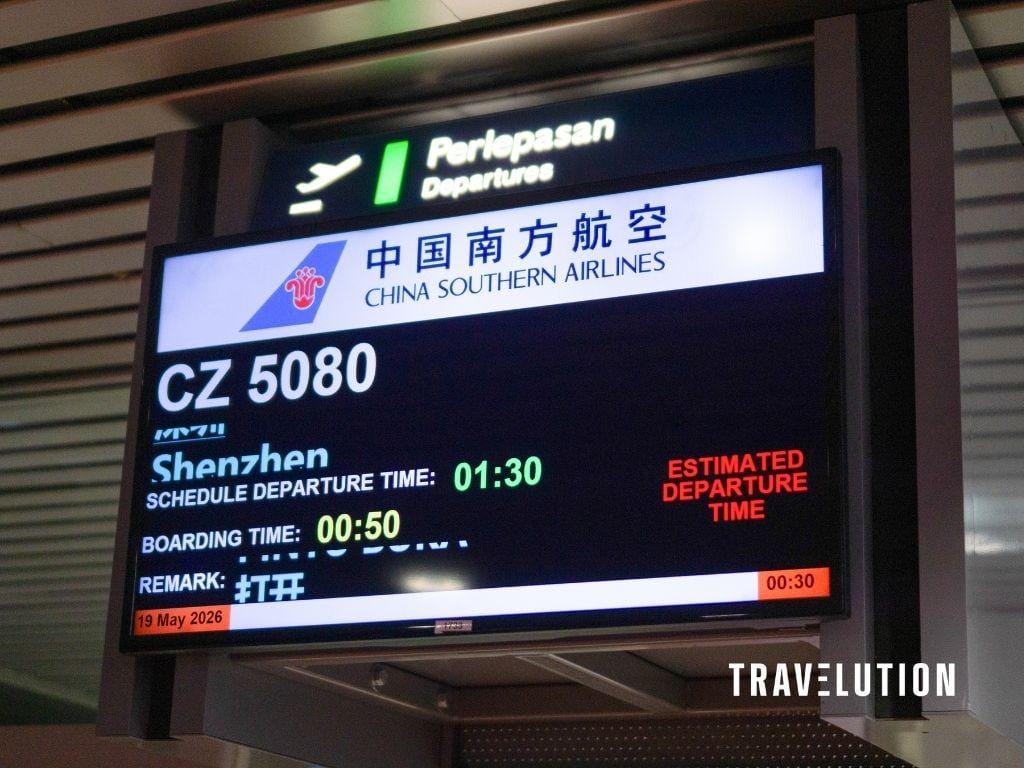
Compared to routing through Shanghai and staying overnight, it immediately felt like a more efficient journey… at least in theory.
Flight from Kuala Lumpur to Shenzhen via China Southern
Our first sector was operated by an Airbus A321 Neo. After boarding, our first impression was that the cabin looked modern and clean. The seats were comfortable and decent overall.
Legroom felt sufficient and didn’t leave us feeling cramped during the journey, although it wasn’t particularly spacious either. There was enough room to settle in comfortably without constantly adjusting your posture.
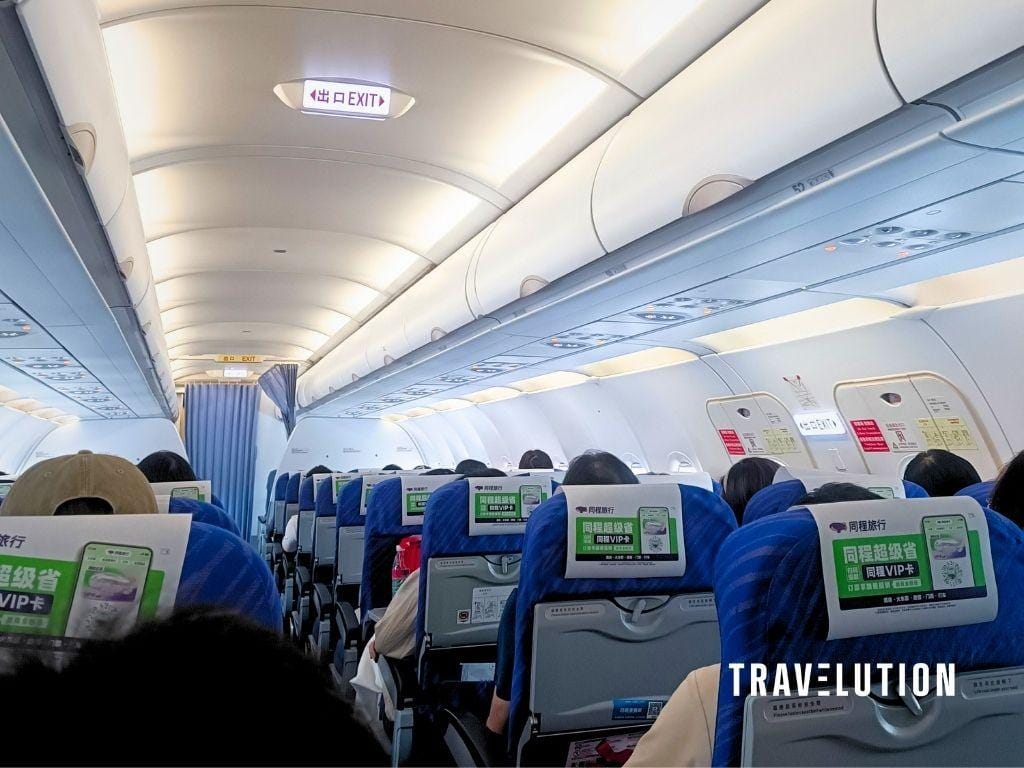
The seats themselves were probably the biggest compromise. Compared to what we remembered from Shanghai Airlines, the A321 Neo seats felt noticeably more upright and slightly firmer. Recline existed, but it wasn’t generous enough to dramatically improve comfort.
One thing worth noting, if you’re assigned the row immediately before the middle emergency exit (ours was Row 36), those seats do not recline. For a red-eye departure, that can make quite a difference.
Another thing we noticed throughout all China Southern sectors was cabin temperature. For travelers from Malaysia, where aircraft cabins often feel heavily air-conditioned, China Southern felt noticeably warmer. Not uncomfortable, but warm enough that we became aware of it.
Entertainment-wise, there wasn’t any. No seatback screens. No streaming options. If you’re flying this route, downloading movies, music, or shows beforehand is almost essential.
Fortunately, the meal ended up being much better than expected. For this flight, we selected the Seafood Noodles. To be honest, airline noodles usually set the bar quite low but this one surprised us.
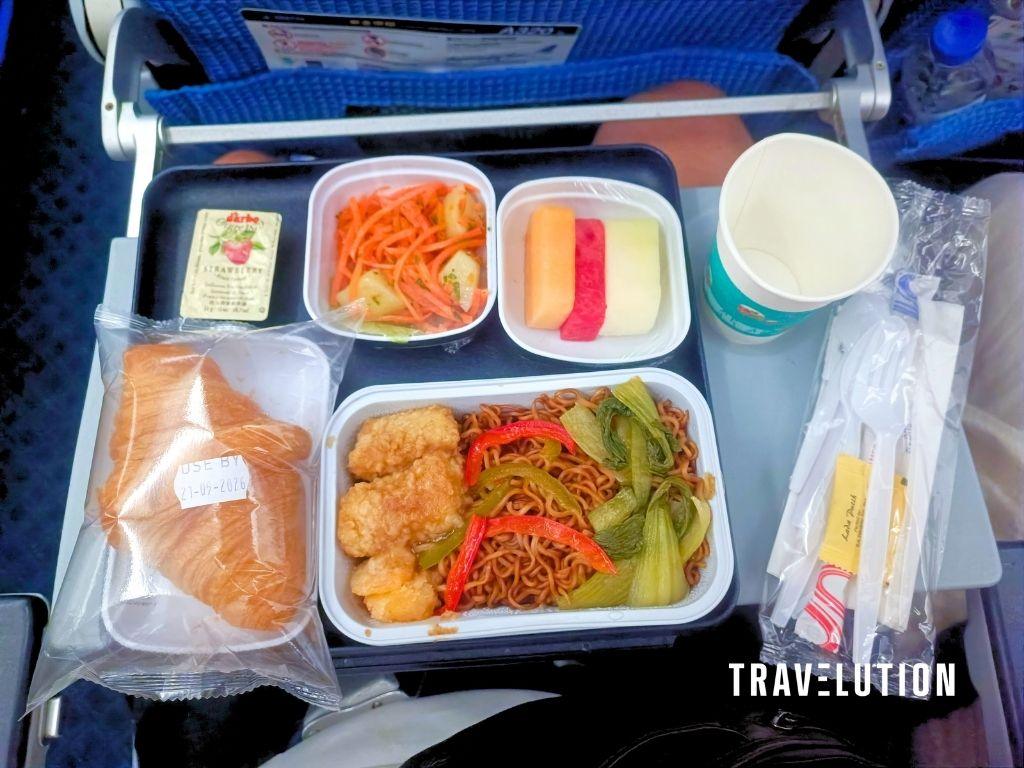
The noodles held their texture surprisingly well and didn’t arrive soaked or overcooked. There was also something about the seasoning that felt oddly familiar, not exactly Malaysian food, but enough to remind us of flavors back home.
The seafood pieces were clearly reheated, but they still retained enough flavour and texture to work. Alongside the noodles came a cold carrot and potato salad, a croissant, and fruit.
The salad was probably the weakest part of the tray. Slightly bland and forgettable. The croissant was acceptable.
The fruit though, as cliché as it sounds, ended up becoming the best part again. There’s just something about cold fruit after a red-eye flight that always feels satisfying.
By the end of this sector, we were pleasantly surprised.
Transit Experience in Shenzhen Airport
One thing we were slightly concerned about before departure was the transit process.
Unlike some international itineraries where baggage gets transferred automatically all the way through, arriving in Shenzhen required us to collect our checked luggage and check it in again before continuing to Lijiang.
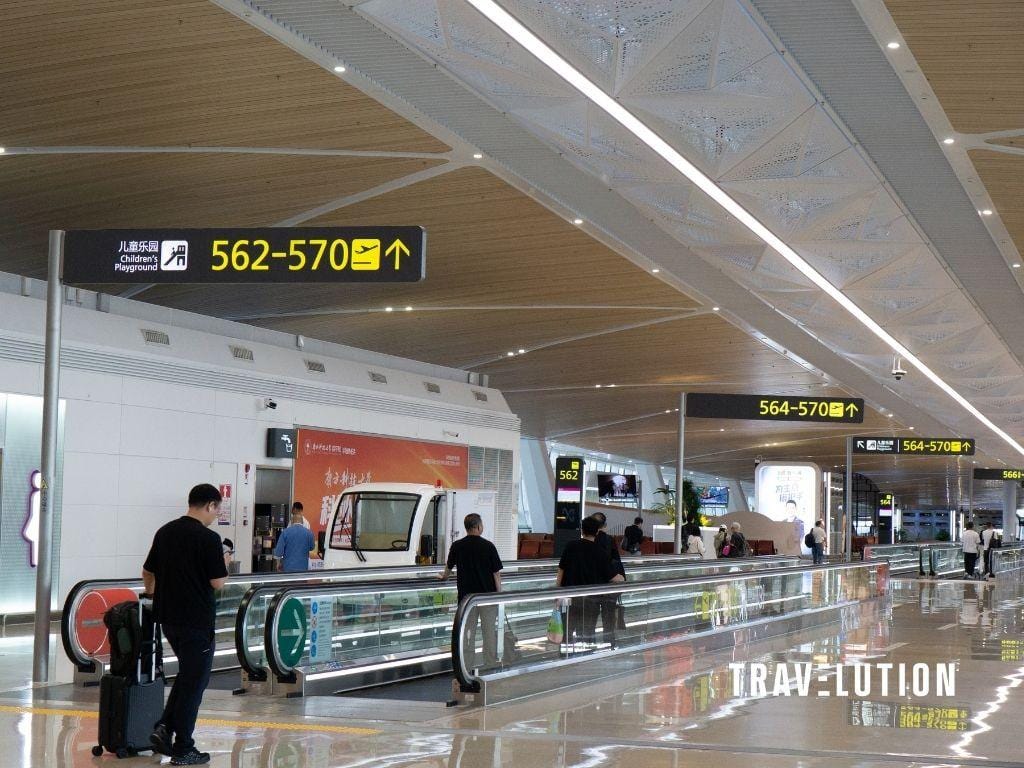
Whenever baggage collection is involved, there’s always that small worry, whether the luggage will arrive quickly, whether the queues will be long, whether there’ll be enough time.
Thankfully, our experience turned out much smoother than expected.
After clearing immigration, our luggage had already arrived at the collection belt, so there was no unnecessary waiting around.
Once we collected everything, we followed the airport signs directing transit passengers to Level 4 Departure Hall, where check-in counters for onward flights were located.
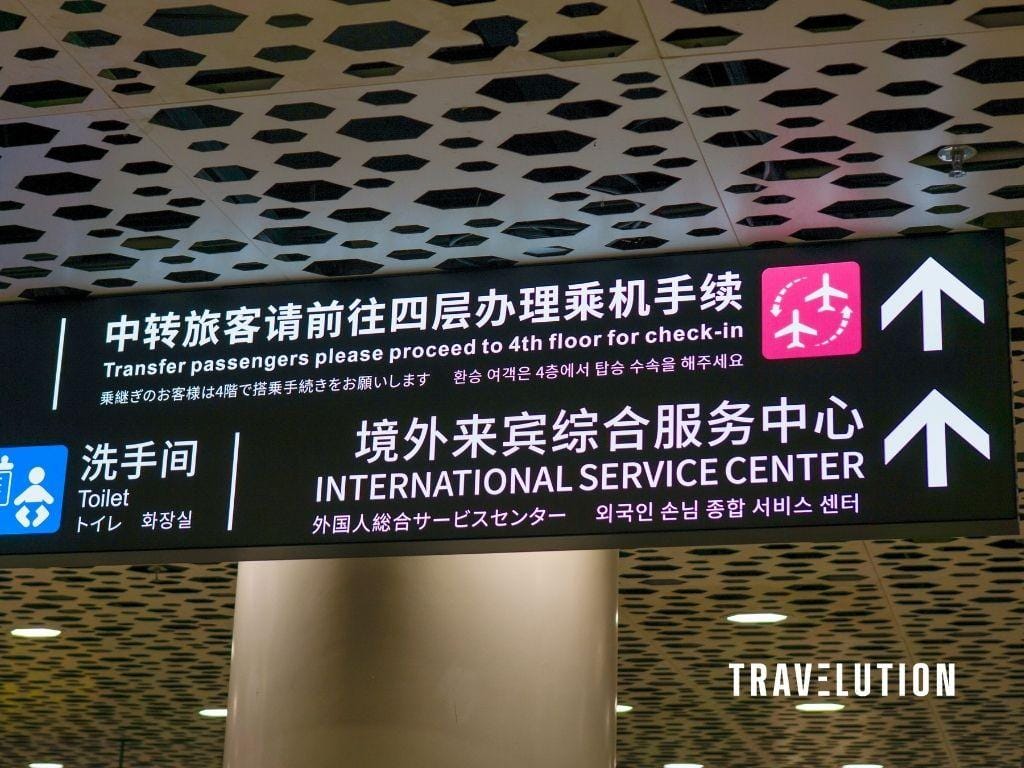
One thing that worked in our favour was that most local travellers seemed to prefer self-service kiosks. We headed directly to the staffed assistance counters instead and found almost no queue.
Within a relatively short time, we were checked in again and heading towards security.
Compared to our previous overnight transit in Shanghai, Shenzhen felt very different. There was less stopping and less downtime.
The process was faster overall, but because you never really leave travel mode, it also felt more physically continuous. You’re moving almost the entire time.
Flight from Shenzhen to Lijiang by China Southern
After transit, we boarded the final flight into Lijiang. This segment was operated by an Airbus A320 and naturally felt more basic compared to the international leg.
The seating setup remained familiar. Legroom stayed reasonable and never became uncomfortable, although the seats still leaned toward the firmer side. Without entertainment, this became another flight where having downloaded content made a big difference.
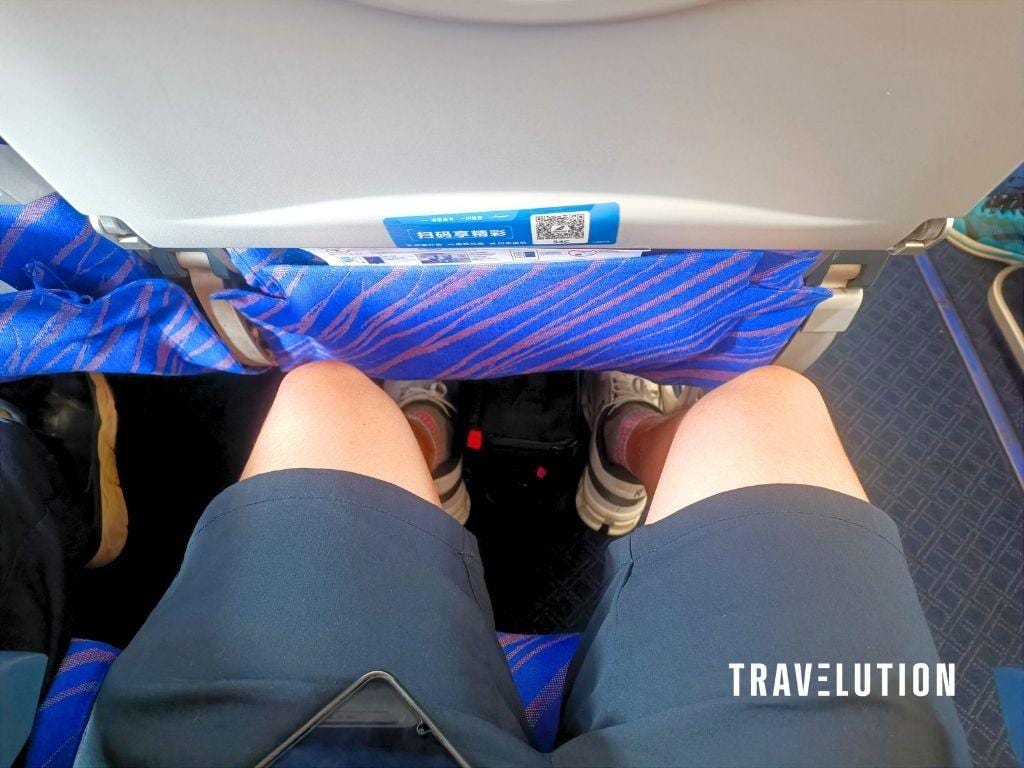
Meal service started not long after take-off. This time, breakfast consisted of Chicken Noodles accompanied by preserved radish and soy milk. At first glance, the tray looked simple. Taste-wise, the noodles were acceptable but leaned slightly bland and softer than we would have preferred.
The preserved radish turned out to be the interesting part. Eating it alone was honestly overwhelming, extremely salty and intensely flavored. After mixing small amounts into the noodles, the entire dish became more enjoyable. The added crunch and seasoning gave the noodles a bit more personality. Not spectacular. Not memorable. But satisfying enough to get through the flight.
One small detail from this flight stood out in an unexpectedly thoughtful way.
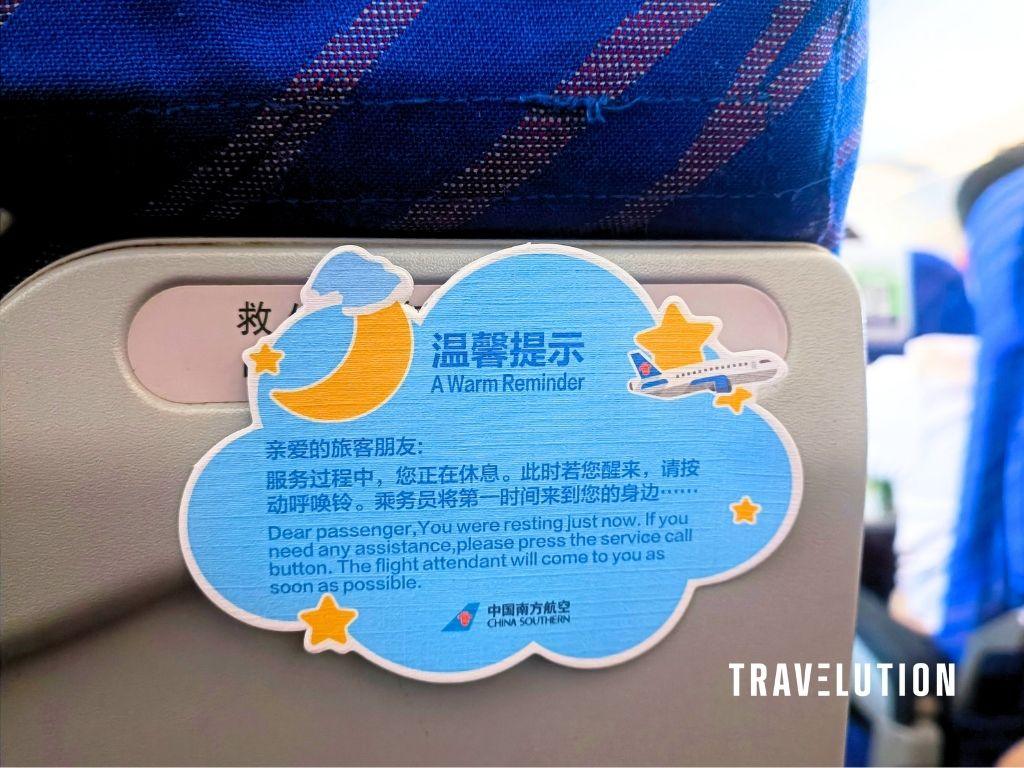
At one point, the flight attendant noticed that I had fallen asleep before meal service. Instead of simply skipping the meal, she gently placed a small sticker on the front of the seat as a reminder that I was resting. It indicated that I could request assistance once I woke up, ensuring I wouldn’t miss the meal entirely.
It was a simple gesture, but it reflected a level of attentiveness that made the flight feel more personal, even on a short domestic sector.
By this point though, our attention was already shifting outside the window. Knowing we were finally approaching Yunnan somehow made everything feel easier.
Return Journey from Lijiang to Kuala Lumpur by China Southern
Interestingly, the return journey ended up being one of the more enjoyable parts of flying with China Southern.
The first flight back to Shenzhen served Braised Fish Rice. Based on previous airline experiences, expectations were low for rice dishes. However, this meal turned out surprisingly decent.
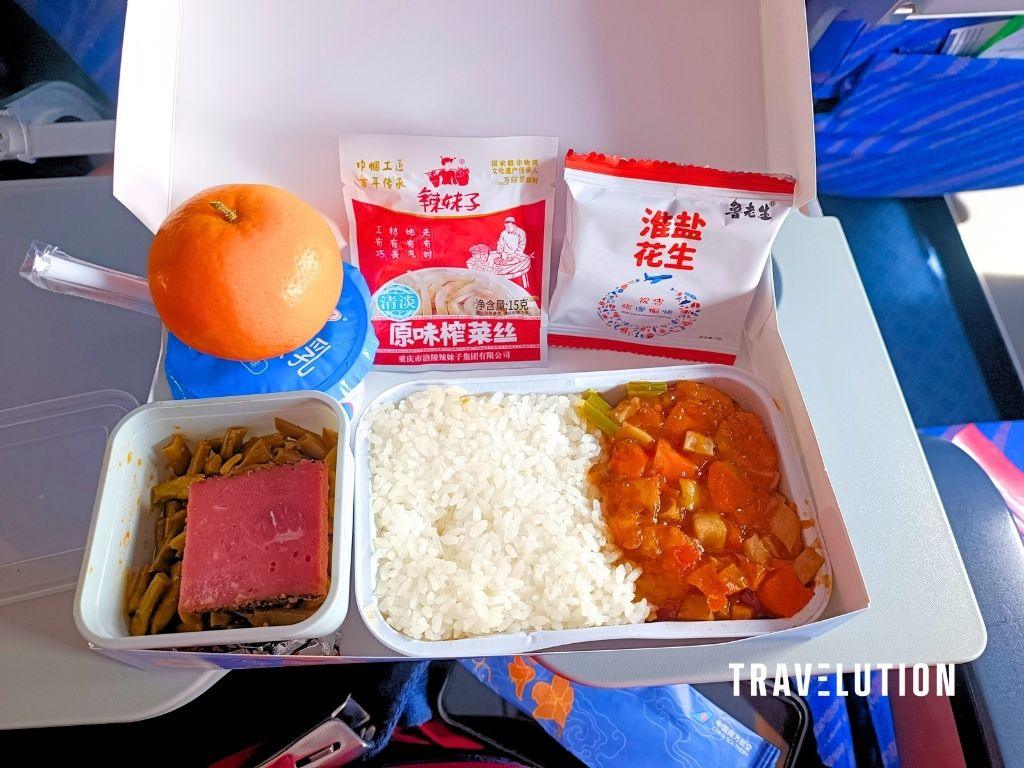
The rice stayed warm and, more importantly, retained actual texture instead of turning into soft clumps. The braised fish itself also performed better than expected. It wasn’t mushy and still had visible fish slices with enough flavour to remain enjoyable.
The side dishes which includes cold beans, preserved vegetables, and salted peanuts, weren’t particularly exciting, although the peanuts unexpectedly became a great snack midway through the flight.
For the final sector back to Kuala Lumpur, meal service switched to Spicy Fish Rice. This version followed a similar formula but felt slightly more complete. The fish carried more flavor and a gentle kick of spice.
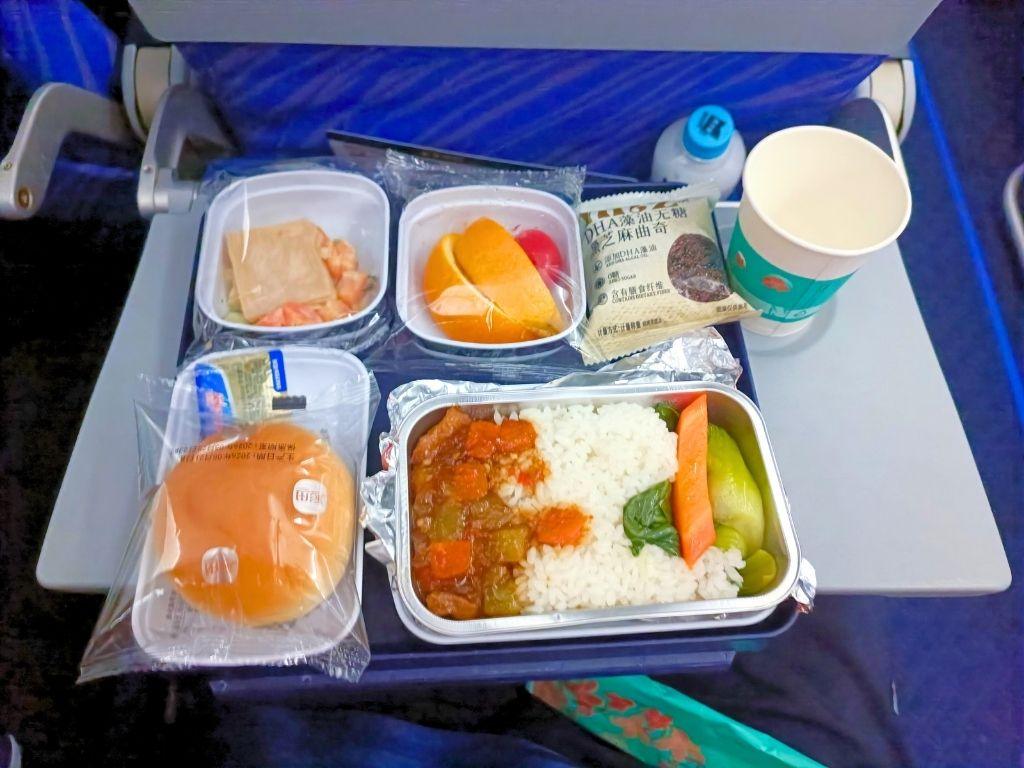
The side salad improved significantly too, topped with a creamy coleslaw-style dressing that balanced the meal better. The sesame cookie was crunchy but slightly dry. The bun paired nicely with butter.
The only disappointment was probably the fruit portion which reduced to only a couple slices of orange.
Transit Experience in Shenzhen Airport
Transit in Shenzhen on the return lasted almost five hours. Fortunately, luggage was checked through all the way to Kuala Lumpur this time. Without needing to think about bags, the transit became unexpectedly enjoyable.
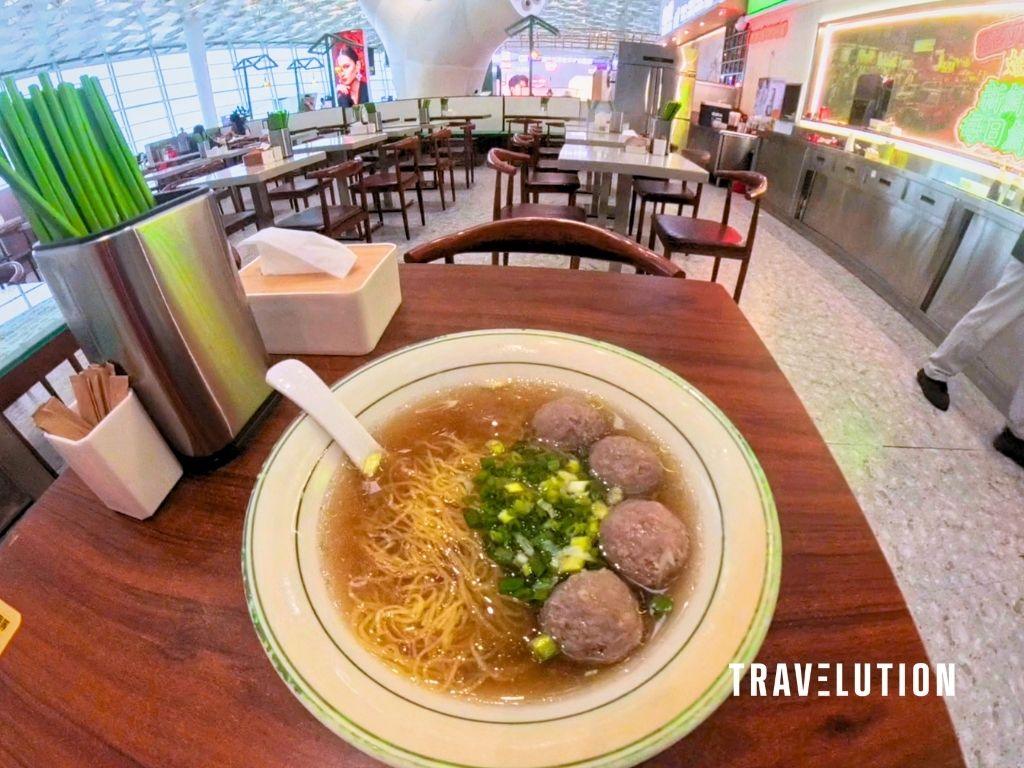
We wandered around duty free stores and eventually settled at a noodle shop inside the airport. We ordered the homemade beef ball wonton noodles. A simple meal but warm, comforting, and surprisingly affordable for airport food.
By the time boarding started, the five hours had passed much quicker than expected. Strangely enough, that ended up summarizing our experience with this route quite well. Efficient, not luxurious, but just comfortable enough that we’d consider doing it again.
Final Thoughts: Which Flight Route to Lijiang Would We Choose?
After making the trip to Lijiang through both Shanghai and Shenzhen, one thing became quite clear to us that choosing flights to Lijiang isn’t simply about finding the shortest route or the cheapest ticket.
Sometimes, the journey itself ends up becoming part of the holiday.
Looking back at our first trip through Shanghai, we probably appreciated it more than expected. Although the overall journey took longer and included an overnight transit, it never really felt like lost time because Shanghai was already part of our itinerary after Lijiang. Instead of rushing through airports, we had the chance to slow down, rest properly, and continue the trip into another city afterwards. The international sector on Shanghai Airlines also felt slightly more comfortable overall, especially with better entertainment and softer seating.
Flying with China Southern via Shenzhen gave us a very different experience.
The route felt more efficient, more direct, and allowed us to reach Lijiang before lunch without needing an overnight stay. Transit procedures turned out smoother than expected, and meal quality was honestly better than we had anticipated. But because the journey was more continuous, it also felt more tiring in a different way, there was less opportunity to truly switch off and rest.
If you’re planning a stay at Club Med Lijiang, flight planning becomes even more worth thinking through in advance. Since getting to Lijiang already takes a fair amount of travel time from Kuala Lumpur, choosing the right route can have a bigger impact on your holiday experience than expected. Based on our experience, we’d probably see the routes this way:
If your plan is to make the trip itself part of the experience, visit another city after Lijiang, travel with family, or simply prefer breaking up long journeys, the Shanghai Airlines + China Eastern route via Shanghai could actually be a surprisingly enjoyable option.
If your priority is maximising your time in Lijiang, travelling on shorter leave, or just getting there with fewer interruptions, then China Southern via Shenzhen feels like the more practical choice.
That said, should we plan another trip to Lijiang today, we’d probably try something completely different. We’d seriously consider flying directly from Kuala Lumpur to Kunming, then continuing to Lijiang by high-speed rail.
After experiencing overnight transits, domestic connections, and baggage procedures, the idea of removing one flight segment entirely sounds increasingly attractive. Although it requires arranging your own transfer from Kunming Airport to Kunming Railway Station, the trade-off could be worth it, especially with the chance to sit back and enjoy a three to four-hour train journey through Yunnan instead.
Of course, that’ll be for the next trip because after trying two very different ways of reaching Lijiang, we realized there probably isn’t a perfect route, only the route that fits the kind of holiday you want to have.